
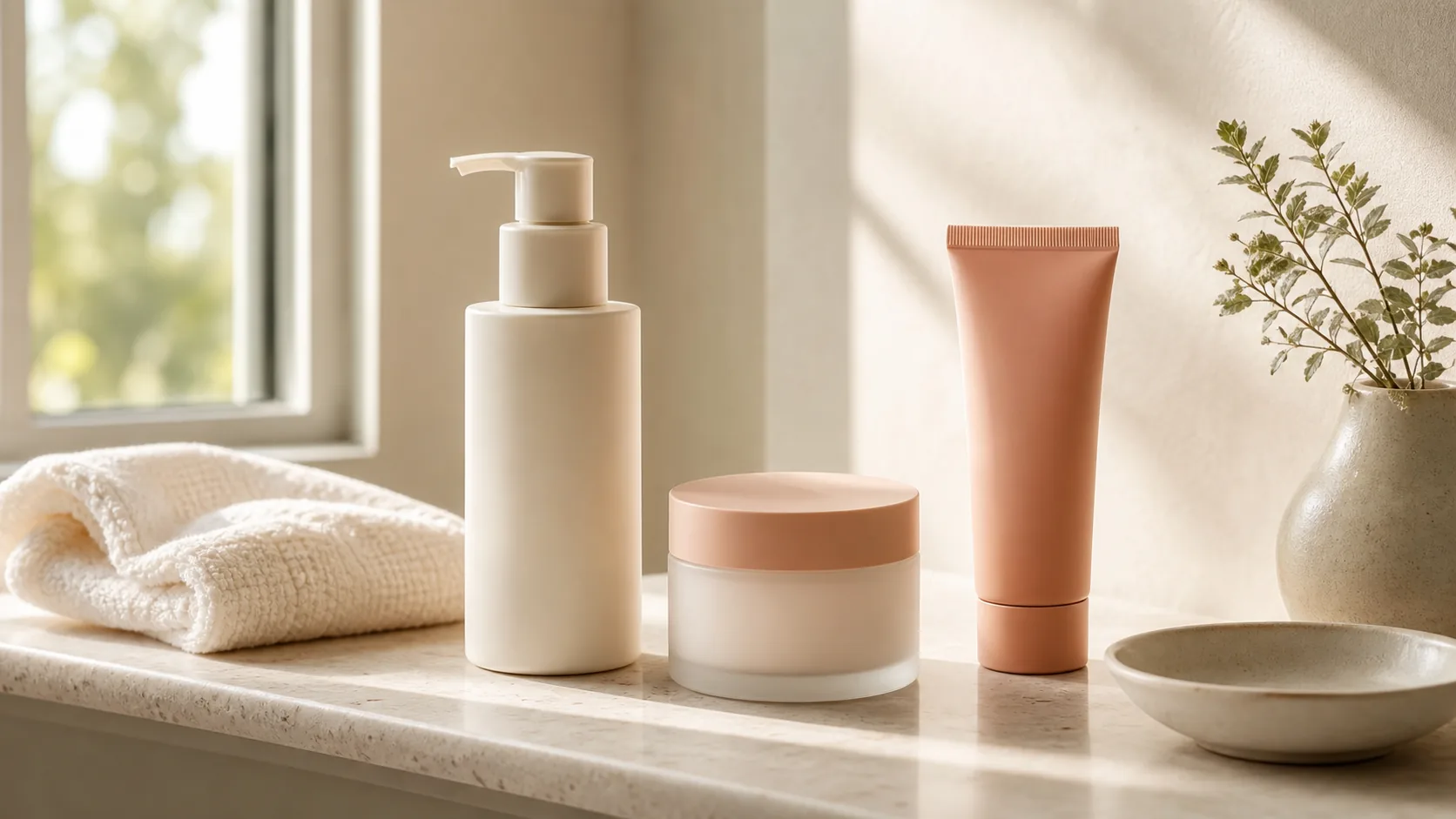
The short answer: cleanse, treat, moisturize, protect
The American Academy of Dermatology gives a practical order: wash gently, apply medication or treatment, apply moisturizer and/or sunscreen, and then apply makeup if desired. That sequence is a useful baseline because it puts a targeted step close to clean skin and leaves daytime protection near the end.
It is not a command to own a product from every category. If your skin feels comfortable without morning cleanser, a water rinse may suit you. If you use no treatment, move directly to moisturizer. If your sunscreen already feels moisturizing enough, you may not want a separate cream underneath. A shorter routine is still a complete routine when every remaining step has a purpose.
Prescription products follow the instructions from your clinician or pharmacy label even when those directions differ from a general article. Product-specific directions also matter for drying time, amount, and frequency.
Step 1: cleanse according to what needs removing
A morning cleanse can remove overnight oil, sweat, and residue from evening products. It does not need to leave the face feeling squeaky. The AAD recommends a gentle, non-abrasive cleanser, lukewarm water, fingertips, and no scrubbing.
Dry or easily irritated skin may feel better with a water rinse in the morning and a cleanser at night. Oilier skin, overnight occlusive products, or exercise before work may make a gentle morning cleanse more useful. The correct choice is the least aggressive method that leaves you comfortable and ready for the next layer.
Pat rather than rub with a towel. There is no prize for waiting until the face is completely dry before applying an ordinary moisturizer; slightly damp skin can make that step feel more comfortable. Follow separate instructions for any treatment that specifically requires dry skin.
Step 2: use a targeted product only when it has a job
A treatment belongs in the routine because it addresses a defined concern, not because a trend calls it essential. Examples include a product recommended for acne, discoloration, or another specific goal. Use it as directed and avoid combining several unfamiliar active products on the same morning.
Starting one product at a time makes reactions easier to interpret. The AAD notes that using too many products can irritate skin, particularly when more than one age-focused active is involved. A routine with one well-tolerated targeted step is easier to evaluate than a stack of serums changed every week.
Thin-before-thick is a helpful texture rule when manufacturer directions do not say otherwise: watery products generally sit more easily under creams. But texture is secondary to instructions. Medication directions, compatibility warnings, and the amount recommended on the label take priority over a generic layering shortcut.
Step 3: moisturize for comfort, not from obligation
Moisturizer can reduce uncomfortable tightness and slow water loss from the skin surface. The texture can change with skin type, climate, season, and what sits underneath. A light lotion or gel may be pleasant in humid weather, while a richer cream may suit dry air or a treatment that leaves skin feeling tight.
Oily skin can still use moisturizer. Look for a lightweight or non-comedogenic formula when heaviness or clogged pores are concerns. Sensitive skin may prefer fragrance-free options with a shorter ingredient list. Expensive packaging is not evidence that a moisturizer will suit you better.
Allow a layer to settle when immediate application causes pilling, but long timed gaps are rarely necessary for an ordinary cosmetic routine. If rolling or clumping continues, use smaller amounts, reduce overlapping products, or test whether two formulas simply do not layer well together.
Step 4: make sunscreen the final skin-care layer
Apply sunscreen after the rest of your morning skin care and before makeup. The AAD recommends broad-spectrum, water-resistant SPF 30 or higher for exposed skin when going outdoors. Sunscreen also works alongside shade, clothing, hats, and decisions about when to spend extended time outside.
Use the amount and reapplication directions on your product. Reapplication becomes especially important during prolonged outdoor exposure, sweating, swimming, or towel drying. A sunscreen that feels good enough to apply properly and repeatedly is more useful than one chosen only for an elegant ingredient list.
Give sunscreen a moment to form an even layer before makeup if immediate application disturbs it. Apply makeup gently rather than vigorously rubbing the sunscreen underneath. Tinted sunscreen can be useful for people who dislike visible white cast, but tint does not replace the need to check the SPF and broad-spectrum label.
What to remove when the routine feels too long
Keep the steps with the clearest purpose: gentle cleansing according to need, comfortable moisture, and daytime protection. Then identify the single treatment most relevant to your current goal. Toners, essences, mists, multiple antioxidant serums, facial oils, and eye creams may be enjoyable, but they are not universal requirements.
Remove duplication before removing a useful basic. Three hydrating layers may not add more comfort than one well-chosen moisturizer. Several exfoliating products can quietly increase irritation. A product that you repeatedly forget or dislike using may be a poor fit regardless of its reputation.
Use the Glowki routine layering builder to map the products you already own. The useful question is not whether your shelf matches somebody else’s routine; it is whether each step has a clear job and the complete sequence is easy enough to repeat.